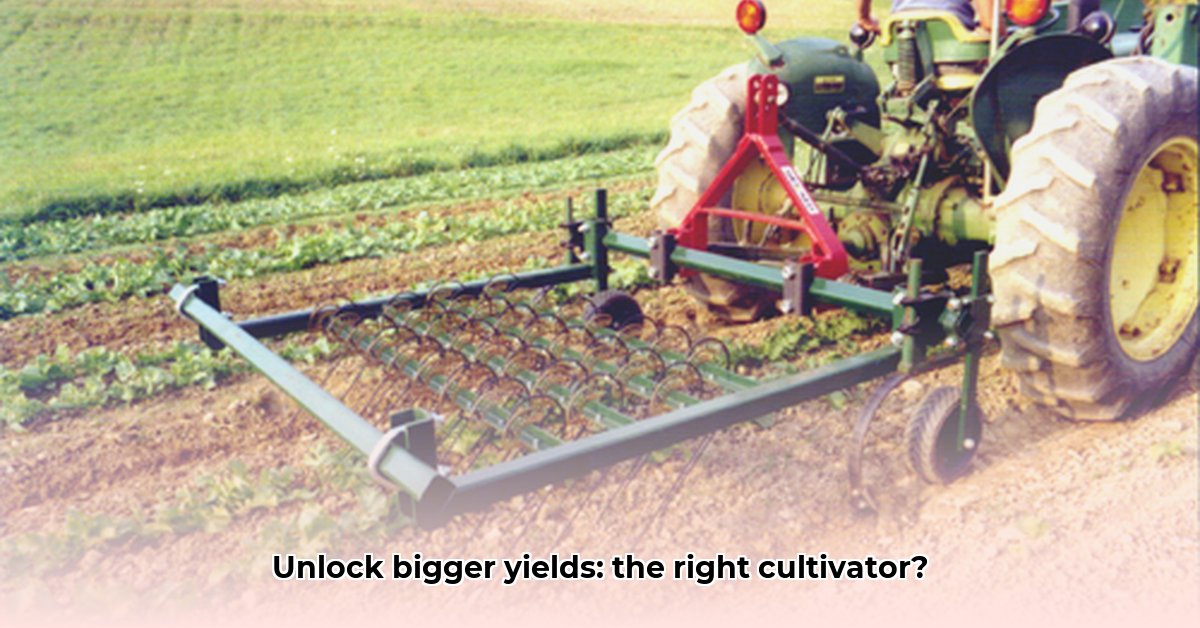
Getting the most from your land starts with the right tools. A tractor cultivator is essential for preparing soil and setting the stage for a bountiful harvest. But with numerous options, selecting the perfect cultivator attachment can be daunting. This guide simplifies the process, regardless of your farming experience. For more information on tractor cultivators, check out this helpful resource: tractor cultivator guide.
Understanding Your Farm's Needs
Before selecting a cultivator, assess your farm's unique characteristics. This involves considering several key factors:
Soil Type: Is your soil sandy and well-draining, or heavy clay that holds water? Sandy soils might require gentler cultivation to prevent erosion, while clay soils benefit from robust tines to break up compaction. Knowing your soil type is crucial for selecting the appropriate cultivator. A soil test can provide valuable insight.
Crop Type: Are you planting delicate seedlings or robust root vegetables? Row crops like corn demand different tillage than broadleaf crops like wheat. Consider the spacing between rows and the need for inter-row cultivation. Delicate seedlings may require minimal soil disturbance, whereas robust root vegetables might tolerate more aggressive tillage.
Farm Scale: A small home garden might only require a small, manually operated cultivator. Large-scale commercial farms need high-capacity attachments for efficient operation, typically integrated with powerful tractors. Scale dictates both the size and capabilities of the cultivator needed.
Budget: Cultivator attachments vary greatly in price. Factor in both initial investment and the long-term maintenance costs. A higher initial investment in a durable, high-quality cultivator might result in lower long-term maintenance expenses.
Exploring Cultivator Attachment Types
A surprising variety of cultivator attachments exists, each suited to specific tasks and soil conditions. Let's explore common types:
Spring-Tined Cultivators: These are ideal for lighter soils, handling weeds effectively with minimal soil disruption. Their flexible tines are gentle yet efficient. They are fuel-efficient and less likely to damage soil structure. However, they might struggle with heavily compacted or rocky soils.
Rigid-Tined Cultivators: These robust tools tackle tough soils and compacted ground. Their strong tines break up even the most challenging soil conditions. Ideal for aggressive tillage or deep soil preparation, but they consume more fuel and may cause more soil disruption. They also require more maintenance.
Sweep Cultivators: These level and smooth the soil surface, creating a consistent seedbed. Excellent for achieving uniform planting depth, but they're less effective for weed control.
Reduced-Tillage Options: Modern cultivators often incorporate reduced-tillage techniques, minimizing soil disturbance. This conserves soil moisture, reduces erosion, and potentially improves soil health. Some studies suggest positive impacts on long-term crop yields. [1]
| Cultivator Type | Soil Type | Ideal Crop Types | Pros | Cons |
|---|---|---|---|---|
| Spring-tined | Light, sandy loam | Most crops, delicate seedlings | Minimal soil disturbance, fuel-efficient | Ineffective in heavy clay, less aggressive |
| Rigid-tined | Heavy clay, compacted | Most crops, root vegetables | Powerful, effective in tough soils | More soil disturbance, higher fuel consumption |
| Sweep | All soil types | All crops | Excellent for leveling, seedbed preparation | Less effective for weed control, lighter duty |
(Diagram showing different tine types would be inserted here.)
Don't you wonder which cultivator attachment best suits your needs?
Choosing the Right Attachment: A Step-by-Step Guide
Analyze your soil: Conduct a soil test to determine texture and drainage. This guides tine selection.
Consider your crop’s needs: Delicate seedlings require gentler tillage than sturdy crops.
Assess farm scale: Match cultivator size to your tractor and acreage.
Set a budget: Factor in initial cost and ongoing maintenance.
Ensure compatibility: Verify compatibility with your tractor's three-point hitch system.
Read reviews: Consult reviews from other farmers for unbiased opinions.
Maintenance and Safety: Crucial Considerations
Regular maintenance extends equipment life and enhances safety. Clean the cultivator thoroughly after each use. Inspect tines for wear and replace as needed. Lubricate moving parts. Always turn off the tractor and disconnect power before maintenance. Wear appropriate safety gear during operation.
Conclusion: Maximize Your Harvest
Selecting the appropriate cultivator is crucial for optimal soil preparation and sustainable farming. By carefully considering soil type, crop needs, budget, and farm scale, you set the stage for a bountiful harvest.
[1]: (Insert citation to relevant research on reduced tillage and crop yields)